HCA Florida Twin Cities Hospital nationally recognized for commitment to excellence in stroke care
~American Heart Association presents Get With The Guidelines® - Stroke Silver Plus award for commitment to delivering evidence-based, life-saving stroke care~
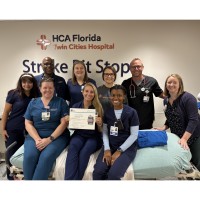
Niceville, Fla. – HCA Florida Twin Cities Hospital has received the American Heart Association’s Get With The Guidelines® - Stroke Silver Plus quality achievement award for its commitment to ensuring people experiencing stroke receive timely, appropriate treatment based on nationally recognized, research-based guidelines, ultimately helping to save lives and reduce disability.
HCA Florida Twin Cities Hospital also received the American Heart Association’s Target: StrokeSM Honor Roll Elite Plus award. To qualify, hospitals must meet specific criteria that reduce the time between arrival at the hospital and treatment with thrombolytic therapy – the use of clot-dissolving drugs to break down blood clots, improving blood flow to vital organs.
“Receiving our first Get With The Guidelines - Stroke award is an important milestone for HCA Florida Twin Cities Hospital and a reflection of the dedication of our physicians, nurses and entire stroke care team,” said Todd Jackson, CEO of HCA Florida Twin Cities Hospital. “By consistently applying evidence-based treatment guidelines, we are helping stroke patients receive timely, high-quality care when every minute matters. I am proud of our team’s commitment to improving outcomes and serving the people of Northwest Florida.”
Stroke is the No. 4 cause of death and a leading cause of disability in the U.S, according to the American Heart Association’s 2026 Heart Disease and Stroke Statistics Report. A stroke occurs when a blood vessel supplying the brain is blocked by a clot or ruptures, preventing blood and oxygen from reaching brain tissue. When this happens, brain cells begin to die. Early detection and rapid treatment are critical to improving survival, minimizing disability and supporting faster recovery.
Get With The Guidelines provides the expertise of the American Heart Association and American Stroke Association to hospitals nationwide, helping ensure patient care is aligned with the latest research- and evidence-based guidelines. Get With The Guidelines - Stroke is an in-hospital program designed to improve stroke care through consistent adherence to these guidelines, which can minimize long-term effects of stroke and help prevent death.
Get With The Guidelines brings the expertise of the American Heart Association and American Stroke Association into hospitals nationwide, helping ensure patient care is aligned with the latest research- and evidence-based guidelines. Get With The Guidelines - Stroke is an in-hospital program designed to improve stroke care through consistent adherence to these guidelines, which can minimize long-term effects of stroke and help prevent death.
###
About HCA Florida Twin Cities Hospital
Located at Highway 85 N and College Boulevard in Niceville, HCA Florida Twin Cities Hospital is a 65-bed acute care hospital with a medical staff of more than 150 physicians. It offers all private rooms and the area’s only Certified Spine Surgery program and first Certified Orthopedic Joint Replacement program, in addition to a state-of-the-art surgery center. HCA Florida Twin Cities Hospital also has 24-hour emergency services, a critical care unit, specialty certification for treatment of sepsis and acute stroke care, and a variety of inpatient and outpatient diagnostic imaging and laboratory services. HCA Florida Twin Cities Hospital also offers emergency care 24/7 at HCA Florida DeFuniak Springs Emergency, 160 Twin Springs Way, DeFuniak Springs, FL.
About HCA Florida Healthcare
HCA Florida Healthcare, a part of HCA Healthcare, is one of Florida’s leading healthcare networks. Its 11,200 physicians and 80,000 colleagues work together to deliver evidence-based, collaborative care through nearly 12.8 million patient encounters annually. With more than 670 connected care sites—including hospitals, physician practices, urgent care centers and freestanding emergency rooms—across the state, HCA Florida Healthcare helps expand access to the specialized care patients need. HCA Florida Healthcare hospitals are annually recognized for excellence in patient experience and clinical outcomes, including three facilities ranked in the top 2% nationally for overall clinical excellence. A leader in healthcare education, HCA Florida Healthcare supports the next generation of healthcare workers through its 153 graduate medical education programs across 29 hospitals. In 2025, the network provided more than $1.1 billion in uncompensated care and contributed more than $3.5 million to community organizations across the state. Visit HCAFloridaHealthcare.com.
About Get With The Guidelines®
Get With The Guidelines® is the American Heart Association/American Stroke Association’s hospital-based quality improvement program that provides hospitals with the latest research-based guidelines. Developed with the goal of saving lives and hastening recovery, Get With The Guidelines has touched the lives of more than 18 million patients since 2001. For more information, visit heart.org.
HCA Florida DeFuniak Springs Emergency
-
Denise Kendust AVO if Community Engagement
- July 28, 2026
- (850) 428-2622
- Send Email
